Although tourism is a blessing for a country’s economy and culture, uncontrolled and irresponsible tourism has become a curse for our natural ecosystems. The damages being caused to biodiversity due to the unregulated behavior of tourists in the forests and tourist centers of Bangladesh are analyzed below:
1. Habitat Destruction and Forest Fragmentation
To provide accommodation and transport facilities for tourists, roads are being constructed deep inside the forests, and resorts are being built. This destroys the integrity of the forest. This is known as ‘Habitat Fragmentation’. When a large forest is broken into fragments, wild animals lose their natural movement corridors. Especially in forests like Lawachara or Satchari, monkeys or langurs do not find continuous canopy pathways to move from one tree to another, as a result of which they frequently get electrocuted or lose their lives under speeding vehicles on the roads.
2. Scarcity of Food and Alteration of Wildlife Behavior
Tourists casually feed wild animals artificial foods such as chips, biscuits, or fried snacks out of sheer amusement. This causes two devastating harms:
- Malnutrition: The bodies of wild animals are not adapted to digest human processed food, which makes them chronically ill.
- Behavioral Change: Animals lose their natural hunting or foraging skills and become dependent on humans. When they do not get food from tourists, they raid nearby human settlements, which intensifies the Human-Wildlife Conflict.
3. Noise Pollution and Disruption of Breeding
The peaceful environment of the forest is essential for the breeding and resting of wildlife. Tourists playing loud music, shouting, and the constant honking of vehicles create immense psychological stress among forest animals. Studies have shown that due to excessive noise, many birds abandon their nests, and many mammals fail to breed normally out of fear.
4. The Toxic Clutches of Plastic and Waste
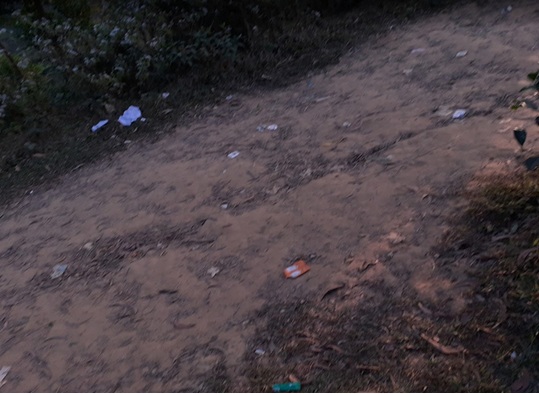
The most visible wound of our tourist centers is plastic pollution. Plastic bottles, chips packets, and polythene discarded by tourists sink deep into the soil and obstruct the nutrient absorption of trees. Frequently, deer or other herbivores consume this plastic, which gets trapped in their stomachs and pushes them toward a slo
5. Reduction of Plant Diversity
Under the heavy trampling of countless tourists, the topsoil of the forest becomes hard and compacted. This is called ‘Soil Compaction’. As a result, new saplings cannot grow, and seed germination is severely hindered. Furthermore, tourists casually pluck rare orchids, flowers, or creepers, which gradually drives specific plant species of that area toward extinction.
6. Pollution of Water Bodies
Many tourist spots in Bangladesh are centered around waterfalls or rivers. Soaps, shampoos, and other chemicals used by tourists alter the pH levels of the water. Consequently, fish, frogs, and tiny aquatic organisms suffer from oxygen depletion and die, which destroys the entire aquatic ecosystem.
None of the damages mentioned above are isolated; rather, they are interconnected. The death of a tree means a bird loses its nest, and losing a bird’s nest means losing a vital medium of seed dispersal for the forest. The “Nature’s Demand” (Prokritir Dabi) movement was born to halt this cyclical devastation. We must transform our tourism from merely a ‘medium of enjoyment’ into a ‘medium of restoration’.